May 12, 2008

Guest Post: Pimiento Cheese


Barbecue, catfish, and grits are true Southern culinary icons, to be sure. Yet despite their humble beginnings, these Dixie-born gems have gone on to become quite popular across the country. As a result, it's not particularly difficult to find foods such as Memphis-style barbecue or garlic-cheese grits in New York or LA (and I don't mean Lower Alabama).

Enter pimiento cheese.

Now, if you read the Otis, My Man!, post back in March, you know that pimiento cheese is one of my favorite foods. I'll happily eat it morning, noon, or night (and all times in between).

First off, in my neck of the woods, the word pimiento is pronounced "PUH-minnuh" (just like the old guys in the bait shop pronounce "minnow," only without the "PUH.")

A cookbook codifying one true recipe, let alone the many regional variations such as adding smoked paprika or jalape–o peppers, is almost impossible to find; favorite recipes seem to survive by way of oral tradition. Therefore, the popularity of this unique spread remains largely confined to states below the Mason-Dixon, where it rightfully assumes its place as an authentic Southern delicacy.

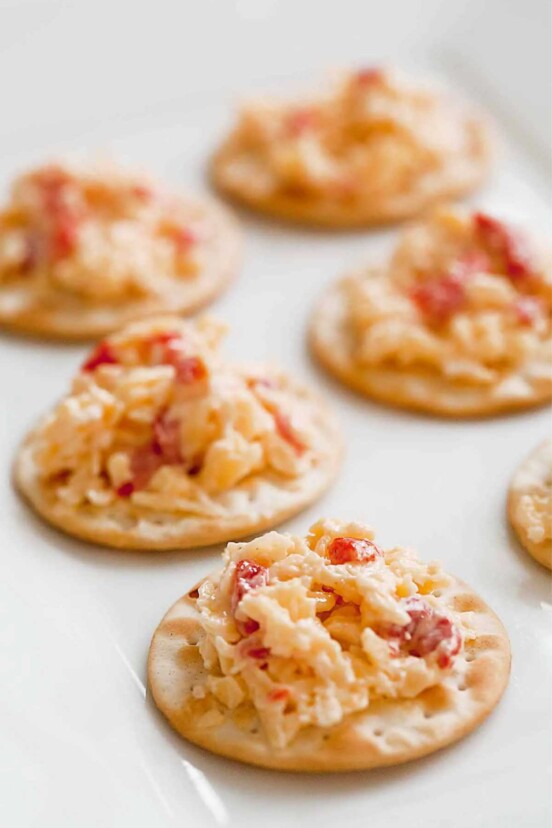
So what exactly is pimiento cheese? To the uninitiated, it's little more than a one-dimensional combination of grated cheese, some chopped pimiento peppers, and a dollop or two of mayonnaise. However, to those passionate fans who rank pimiento cheese right up there beside cold fried chicken and deviled eggs as essential provisions at any proper picnic, it's more, much more. (Speaking of deviled eggs, try substituting pimiento cheese for mayonnaise in your favorite recipe.)

Novelist and North Carolina-native Reynolds Price says, "It was the peanut butter of my childhood." As an adult, he now swears by its restorative powers. "I've been caught eating a pound in two days, especially if life is hard. On rough brown bread, it's a sovereign nerve salve," he admits. To other devotees, a tub of pimiento cheese in the kitchen becomes a multi-functional must-have--elevating an ordinary grilled cheese to something heavenly (particularly when combined with sliced Roma tomatoes and crispy bacon) and dramatically raising the bar on the everyday cheeseburger and omelet.

Admirers regularly agree that sharp Cheddar cheese is the backbone of the mixture--the sharper, the better. High-quality mayonnaise, such as Hellmann's or Duke's, is also a given. But here's where the opinions begin to fork off in more directions than tributaries leading into the Mississippi. On the issue of texture, should the cheese be grated or mashed? If grated, does coarse or fine yield the best results? If mashed, is the fork or the modern food processor the best tool? Then there are the legions who make pimiento cheese by running all ingredients through a meat grinder (aka "the old-fashioned way").

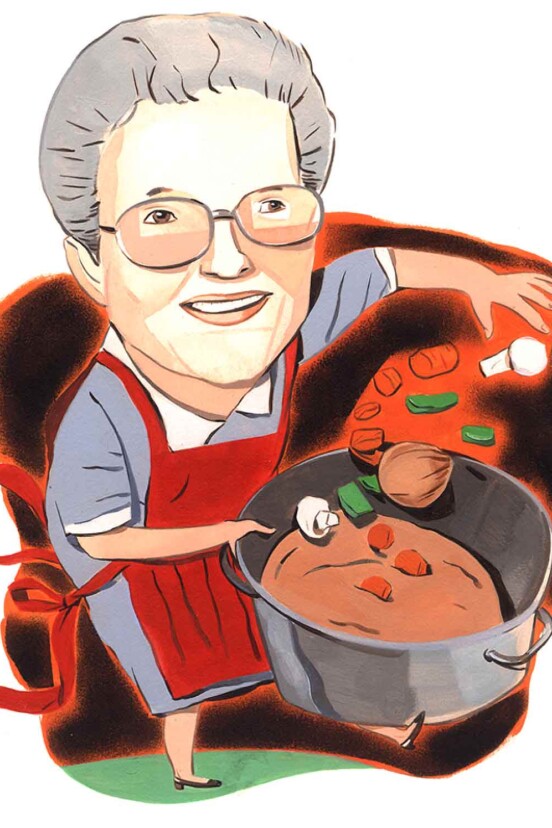
In my search for the definitive blend, I asked Mary Allen Perry, a member of the Southern Living Food team (and long recognized for her exemplary pimiento cheese-making skills) to share her secret recipe. She happily (and thankfully) agreed. However, Mary Allen, giving credit where credit is due, admits, "My recipe was originally that of my great grandmother Kersh, who lived a vibrant life until she was 98-slim, trim, and fearless of fat content."

The recipe eventually made its way to Mary Allen's Aunt Carolyn, who added a touch of Worcestershire sauce and finely grated onion. "They worked by taste and feel, dismissing the exactness of measurement," says Mary Allen, explaining how she drew upon childhood memories to record this fabulous formula. So, whether you use pimiento cheese to fill celery sticks or cherry tomatoes, spread it on crackers or a slice of your favorite bread, you should feel confident with this terrific version.

Classic Pimiento Cheese
Makes 4 cups

Ingredients
1 1/2 cups mayonnaise
One 4-ounce jar diced pimiento, drained
1 teaspoon Worcestershire sauce
1 teaspoon finely grated onion
1/4 teaspoon ground red pepper
One 8-ounce block extra-sharp Cheddar cheese, finely shredded
One 8-ounce block sharp Cheddar cheese, shredded

Method
Stir together first 5 ingredients in a large bowl; stir in cheeses. Store in refrigerator up to 1 week.

Variations
Jalapeno Pimiento Cheese: Add 2 seeded and minced jalapeno peppers.

Cream Cheese-Olive Pimiento Cheese: Reduce mayonnaise to 3/4 cup. Stir together first 5 ingredients, 1 (8-oz.) package softened cream cheese, and one 5 3/4-ounce jar sliced salad olives, drained. Proceed with recipe as directed.

Pecan Pimiento Cheese: Stir in 3/4 cup chopped pecans, toasted.

-----
Southern Living Executive Food Editor SCOTT JONES is a graduate of The Culinary Institute of America. Jones has received awards from the International Association of Culinary Professionals and the James Beard Foundation. In addition, he holds a degree in magazine publishing and journalism from the University of Mississippi and is the author of the Southern Living Wine Guide and Journal. Do you have a great Pimiento Cheese recipe? Please share it with Scott (and it might even make it into the magazine).

Labels: , ,

1 Comments:

Anonymous Buddy West said...

What a fun introduction to, what for me, is a new "food" -- gonna whip up a batch this afternoon. I love the variation with jalapeno peppers.

5/15/08 10:24 AM  

Post a Comment

Links to this post:

Create a Link

<< Home

May 1, 2008

So You Wanna Buy a Knife, Huh? Part 2


Warning Signs (How Not to Buy Garbage)
Sometimes it can be a little hard to tell quality knives from knives that simply have better marketing budgets. Here are the warning signs that the knives you are looking at might be not be all that they seem:

Locale -- you generally don't find quality kitchen knives at the grocery store, the gas station, the hardware store, the sporting goods store or the bait and tackle shop. The local big box retailer is also not a place to buy good kitchen knives. Yes, they may actually have recognizable and reputable brand names, but it's not the top of the line. The margins just aren't there. Stick with a specialty kitchenware shop, cutlery store or online cutlery retailer. You can find decent knives in department stores, but the clerks don't have the knowledge or flexibility you need to get exactly what you want. You either buy their box or go home. Go home. You can do better.

Price -- Most of the time you do indeed get what you pay for. A good chef's knife generally costs somewhere between $80 and $150. Some are substantially more than that. There are some bargains out there, but for the most part a six piece set of knives (with block!) for $49.95 is no bargain. Expect to pay upwards of $400 to $500 for a good matched set of knives, if that's how you are inclined. This is a big reason I'm not a fan of boxed sets of knives. On a per-knife basis a set can be a good deal, but you also pay a hefty surcharge for knives you don't need. Most manufacturers offer a two or three piece "starter set" for this very reason.

Mystery steel -- If they won't tell you what's in the steel, they probably aren't very proud of it. There also are manufacturers who feel that you have no need for this information and would be too dumb to make use of it if you did. They don't deserve your business. At a bare minimum, you should see the words "high carbon" somewhere. That phrase is open to very flexible interpretation, but it at least means you are in the ballpark.

Weasel words -- Beware of meaningless marketing drivel, words like "surgical steel." There is no such thing. The word "stainless" all by itself without the "high carbon" modifier tends to be a bad sign, too. It sounds authentic, but low carbon stainless steel is awful. It is hard to sharpen and will not take or hold a decent working edge. It can be manufactured and sold cheaply, however, which is why a lot of people end up with knives that just make them miserable.

Flex -- fillet knives aside, a good knife blade is fairly stiff. You shouldn't be able to bend it or flex it very much. If you can, that's usually a sign of cheap, low carbon steel or a heat treatment that left the knife softer than you want in your kitchen. If the blade feels flimsy, it is.

Never needs sharpening -- Yes they do, you just don't want to. "Never needs sharpening" is the weasel term for a serrated edge, even if the maker tries strenuously to avoid calling it that. These knives are garbage. Avoid them at all costs. They are lousy performers to begin with and when they do eventually go dull they cannot easily be sharpened back to usefulness. They tend to be made with very cheap steel and depend entirely on the ripping action of the teeth to work. Might be handy in the tackle box, where corrosion resistance is more important that cutting ability, but these knives are not something worthy of your kitchen.

Country of origin -- The knife making centers of the world are (or were) justly famous for their products: Solingen in Germany, Thiers in France, Sheffield in England, and Sakai and Seki City in Japan. When you buy a kitchen knife from one of these places, you stand a pretty good chance of getting a quality knife. When those manufacturers farm the work out to another country, you're probably getting cheap steel, punched out and slapped together by the thousands to feed the gaping maw of commerce. Put another way, a knife from Solingen stands a good chance of being high quality. A knife from a Solingen-based manufacturer who has the blades stamped out in Paraguay and assembled in Bora Bora probably isn't worth a damn, even if it does have the logo of a famous brand.

-----
CHAD WARD is the author of An Edge in the Kitchen, available in June from Morrow Cookbooks. He has been a writer and (sometimes professional) cook for more than 20 years. His work has appeared in publications ranging from Best Food Writing to Aviation International News. He lives in North Carolina.

Labels: , ,

0 Comments:

Post a Comment

Links to this post:

Create a Link

<< Home

Apr 30, 2008

So You Wanna Buy a Knife, Huh? Part 1


You have decided that it is time to get serious, time to show the world that you have arrived and are ready to cook. You have decided to buy some decent kitchen knives. Buying a good knife or two can be a little like buying your first car. It can be intimidating and expensive. There are a lot of people with very strong opinions about what you want, need, and desire. What no one ever tells you is what not to buy. So let's take a look at some of the common mistakes that people make when they purchase kitchen knives.

Don't Be a Blockhead
You see them in the store. They are beautiful, with their sexy handles all lined up just so. You glance around and then surreptitiously fondle them, damning the safety device that keeps you from sliding the gleaming blade from the block. The salesman sidles up and in a throaty whisper says, "It comes with the sharpening steel and the mango slicer." You swoon. A mango slicer? Who knew there was such a thing? This must be a great set of knives.

Thus, you are seduced. And like all victims of seduction, you know that not all is as it seems, but you don't care. You buy the big block of knives. It's a steal! You got nine knives, some kitchen shears, and a sharpening steel for the same price as just two knives down at the high-rent end of the store display. Thus begins a cycle of frustration and recrimination that will still leave you using just three knives. Three mediocre knives. Three knives that you don't like and that will sit forlornly in the block with their unused siblings when you can't take it anymore and upgrade to better knives. That block of knives looks great to the uninitiated, but it doesn't do anything to address what you--and you alone--really want or need as a cook.

So, what do you really need? With a good chef's knife and a paring knife you can do anything and everything you ever need to do in a kitchen. Throw in a big serrated bread knife and you'll own the world. Anything else is a convenience rather than a necessity. So don't be a blockhead. Don't buy knives you don't need. Buy fewer higher-quality knives and build slowly. Mix and match to suit your tastes and cooking styles. You'll be happier. Get the best you can afford and start slow. Mismatched handles in the knife block or kitchen drawer are a sign of a comfortable and self-assured cook.

The Chef's Knife
The chef's knife is the first knife you pick up in the kitchen and the last one you put down. You can do 90 percent of everything you ever need to do in the kitchen with just a chef's knife. You can do 100 percent if you really have to. This is the Big Kahuna. It is not just the most important knife in your kitchen, it is the most important tool in your kitchen. Buy accordingly. Even if you are brand-new to cooking, very soon you won't be able to imagine trying to prepare a meal without your chef's knife. It is your paintbrush, your means of self expression--and more importantly, your means of getting dinner on the table. Expect to pay somewhere between $85 to $150 for a good one. Some chef's knives go for more than $250 for a standard 8-inch knife, but there are bargains out there too.

The Paring Knife
The next player in the kitchen triumvirate is the paring knife. This is the microsurgery version of the chef's knife. Paring knives are used for all those delicate little tasks--scoring oranges peels, cutting the cores out of apple quarters, removing eyes from potatoes, hulling strawberries. The paring knife is perfect for those chores where a chef's knife would be unwieldy. The blade usually ranges from 2 inches to about 4 inches in length and comes in a variety of shapes.

Slicer or Bread Knife
The greyhounds of the kitchen, slicers are long and lean. Slicers start at 9 inches and are available up to 18 inches. The length of the blade allows you to make a clean slice in a single stroke. This is especially important when carving roasted meats or slicing fish. Excessive sawing back and forth leaves ridges and a rough texture that is unattractive. The narrowness of the blade helps keep moist foods from sticking. A standard bread knife has a serrated edge, which is fine for most breads but absolutely lousy at slicing a roast. A better choice is a scalloped edge. A scalloped edge slicer can do double duty as a good slicing knife and a good bread knife. Scalloped edges are more gentle than serrated edges and generally leave a cleaner cut.

Sounds like heresy, doesn't it? All of your friends have big fancy blocks of knives, so that's what you want too. Relax, you'll get there. But by starting with The Big Three, you'll build a set of knives that suits your cooking style and your budget, knives that you will still be using when your friends dump their big blocks of knives and go looking for new ones.

-----
Chad Ward is the author of An Edge in the Kitchen, available in June from Morrow Cookbooks. He has been a writer and (sometimes professional) cook for more than 20 years. His work has appeared in publications ranging from Best Food Writing to Aviation International News. He lives in North Carolina.

Labels: , ,

0 Comments:

Post a Comment

Links to this post:

Create a Link

<< Home

Apr 29, 2008

Mushrooms, Mushrooms Everywhere


Around this time of year, I start getting interested in the woods again, because this is when the columbines, wood anemones, and--most significantly--the morels appear. Unfortunately, there has been no rain for weeks and the woods have been bone-dry (in fact, there have been forest fires about ten miles from here). However, yesterday it rained for about 15 hours, a good long soaking, and I knew that mushrooms would be pushing through the leaf litter. I actually woke up dreaming of collecting a big bag full of them.

The weather was cool and gray this morning, but that only made the hunt more challenging: The mushrooms are the same color as the leaves through which they barely peek and, without bright sun, there aren't even any shadows to help in spotting them.

The photo above is of this year's first morel--the first of two dozen that will find their way into a pot of risotto tonight. Spring has now officially arrived.

Labels: , ,

1 Comments:

Blogger Rachel Seow said...

Yum! Sounds like that's going to be one heck of a risotto. Lovely photo, too, Gary.

5/2/08 2:44 AM  

Post a Comment

Links to this post:

Create a Link

<< Home